
AI Technology in Aesthetic Skin Care for Smarter Personalized Treatment

Aesthetic skin care has moved far beyond a one-size-fits-all facial or a quick beauty fix. People now want treatments that are precise, safe, measurable, and suited to their skin’s real condition, not just its surface appearance. This is where artificial intelligence is changing the conversation.
AI in aesthetic dermatology does not replace clinical judgment. It gives skin experts better information, more consistent tracking, and sharper tools for planning care. At Mesoderma Aesthetic Skin Clinic, the value comes from combining advanced technology with trained clinical expertise, so each treatment journey can be guided by both data and human understanding.
This shift matters because skin is complex. Pigmentation, acne, fine lines, pores, texture, sensitivity, hydration, and early signs of aging can overlap. What works well for one person may irritate or underperform for another. AI helps bring more clarity to those decisions.
This article is for general information only and should not replace a consultation with a qualified skin care professional.

AI makes skin analysis more detailed and consistent
Traditional skin assessment relies on visual checks, touch, medical history, lifestyle questions, and clinical experience. These still matter. AI adds another layer by helping capture and compare details that the human eye may miss during a short consultation.
Advanced skin analysis systems can assess multiple concerns, such as:
Uneven pigmentation
Redness and visible sensitivity
Fine lines and wrinkles
Pore appearance
Oil balance
Skin texture
Hydration indicators
Acne-prone areas
Sun-related changes
The key benefit is consistency. A clinician may observe that pigmentation looks lighter after treatment, but AI imaging can help compare images over time under similar conditions. This makes progress easier to track and helps avoid guesswork.
At Mesoderma Aesthetic Skin Clinic, this kind of technology supports a more structured consultation. The process can begin with imaging, skin history, and a discussion of concerns. The data then helps guide the treatment plan, while the clinician interprets the findings in context.
That context is essential. AI may detect redness, for example, but a trained professional considers why it may be present. It could relate to sensitivity, recent exfoliation, rosacea-prone skin, acne inflammation, heat exposure, or product overuse. Technology can show patterns, but clinical expertise gives those patterns meaning.
This is the heart of `AI Technology: A New Era of Advanced Aesthetic Skin Care`. It moves aesthetic care from broad assumptions toward more informed decisions.
Data-driven consultations create better treatment plans
A consultation should not feel rushed or based only on what appears in the mirror that day. Skin changes with weather, hormones, stress, sleep, diet, medication, and product use. A data-driven consultation creates a clearer baseline before treatment begins.
At Mesoderma Aesthetic Skin Clinic, a data-led approach can help answer practical questions:
Which concern should be treated first?
Is the skin barrier strong enough for an active procedure?
Are pigmentation and texture both contributing to dullness?
Would a gentler plan be safer before moving to stronger treatments?
How should at-home skin care support in-clinic procedures?
This matters because aesthetic treatments often work best as part of a sequence. For example, someone seeking brighter skin may need hydration support, barrier repair, pigmentation management, and sun protection education, rather than only one session of a brightening treatment.
AI-supported analysis helps clinicians build a more thoughtful plan. It can help separate visible concerns from underlying patterns. It can also help record progress in a way that feels more objective.
The strongest results in aesthetic skin care often come from the right diagnosis, the right timing, and the right follow-through.
Data also improves the conversation between the client and the clinician. Instead of saying, “Your skin looks better,” the consultation can review changes in tone, texture, pore visibility, redness, or hydration signs. This makes the journey easier to understand and helps set realistic expectations.
That does not mean every decision should come from a machine. AI is a tool, not the final authority. The best care comes from matching digital findings with medical history, skin behavior, comfort level, and long-term goals.

Smart aesthetic machines bring greater precision to treatments
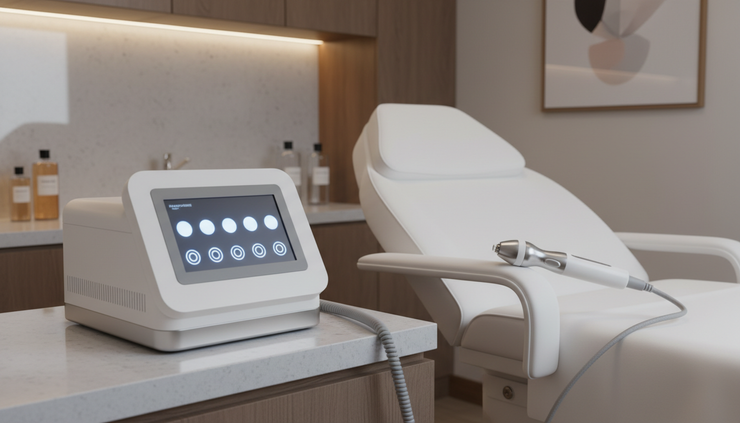
AI is also changing the machines used in aesthetic skin care. Many modern devices now use sensors, digital controls, preset safety parameters, and treatment feedback systems to support more precise care.
These smart systems may assist with treatments that involve energy, light, radiofrequency, ultrasound, microneedling, or skin resurfacing methods. The goal is not to make treatment automatic. The goal is to help the clinician deliver care with better control.
Smart aesthetic machines can support precision in several ways.
They help guide treatment depth and intensity
Different areas of the face may need different settings. The skin around the eyes, cheeks, jawline, and forehead does not have the same thickness or sensitivity. Data-assisted machines can help clinicians select settings with more care.
They support safer treatment planning
Skin tone, sensitivity, pigmentation tendency, acne activity, and previous procedures all affect treatment choice. Devices with smarter controls can help reduce avoidable irritation when used properly by trained professionals.
They make progress easier to monitor
Some machines allow better record-keeping of settings and treatment areas. This helps the clinic compare sessions and adjust future care based on response.
They improve consistency
Consistency matters in aesthetic care. When device settings, skin analysis, clinical notes, and patient feedback work together, the treatment journey becomes more organized.
At Mesoderma Aesthetic Skin Clinic, the integration of smart machines and skilled hands is central. A machine can deliver energy or measure skin features, but it cannot understand a person’s lifestyle, comfort, medical background, or aesthetic preferences on its own. That is where the clinician’s role remains vital.
AI और Aesthetic Skin Care का नया दौर reflects this wider movement, where beauty treatments become more scientific, personalized, and carefully guided.
Personalized skincare routines connect clinic results with daily care
In-clinic treatments can do a lot, but daily skin care shapes how well results last. This is another area where AI can support better decisions.
Many people choose skin care products based on trends, recommendations from friends, or trial and error. The result can be an overcrowded routine with too many actives, not enough barrier support, or products that do not match the skin’s actual needs.
AI-supported skin analysis can help make routines more specific. For example, a personalized plan may consider:
Skin type and oil balance
Dryness or dehydration signs
Sensitivity and redness
Acne tendency
Pigmentation concerns
Fine lines and texture
Treatment history
Seasonal changes
Current product use
This helps avoid common mistakes. Someone with dullness may assume they need strong exfoliation, but imaging and clinical review may show dehydration and barrier stress. In that case, a gentler routine may be a better first step.
Personalized skin care also improves treatment preparation and recovery. Before a procedure, the clinic may recommend calming, hydrating, or barrier-supporting products. After treatment, the focus may shift to soothing care, sun protection, and avoiding harsh actives for a period of time.
A good routine does not need to be complicated. It needs to be consistent and suited to the skin. For many people, the strongest foundation includes:
A gentle cleanser
A targeted treatment product when needed
A moisturizer that supports the skin barrier
Daily broad-spectrum sunscreen
Periodic review as the skin changes
AI can help suggest direction, but a professional review helps prevent over-treatment. Personalization works best when it is practical, safe, and easy to follow.
Mesoderma’s approach blends technology with clinical judgment
The value of AI in aesthetic skin care depends on how it is used. Technology alone cannot create trust. A good clinic uses it to support better listening, better planning, and better follow-up.
At Mesoderma Aesthetic Skin Clinic, the integration of AI technology and clinical expertise can shape the treatment journey in a clear sequence.
Stage of care | How AI supports it | How clinical expertise adds value |
Initial consultation | Captures detailed skin data and baseline images | Interprets findings with medical and lifestyle context |
Treatment planning | Helps identify priority concerns and trackable goals | Selects safe, suitable procedures for the individual |
Treatment sessions | Supports precision through smart devices and records | Adjusts technique based on skin response and comfort |
Home care planning | Guides product choices based on skin patterns | Builds a realistic routine and prevents overuse |
Follow-up review | Compares progress over time | Refines the plan based on results and goals |
This model creates a more complete experience. The consultation becomes more than a quick look at the skin. It becomes a guided assessment that considers what the skin shows, what the person feels, and what the data records.
A data-driven approach also helps manage expectations. Aesthetic skin care is not instant perfection. Pigmentation, acne marks, texture, and aging signs often need time, maintenance, and combined care. When progress is tracked clearly, small improvements become easier to see and treatment plans can be adjusted with more confidence.

The future is science-driven, personal, and holistic
AI is helping aesthetic dermatology become more precise, but its biggest promise is not only technical. Its real value lies in creating a more connected treatment journey.
That journey begins with detailed skin analysis. It continues with careful treatment planning, smart aesthetic machines, and home care that fits the individual. It improves through follow-up, measurement, and clinical review. Each step informs the next.
For Mesoderma Aesthetic Skin Clinic, the future of aesthetic skin care is a thoughtful blend of science and artistry. AI brings structure and data. Clinical expertise brings judgment, empathy, and experience. Together, they support care that looks beyond surface beauty and focuses on long-term skin health.
The next era of aesthetic skin care will not be defined only by advanced machines or digital scans. It will be defined by how well technology and human expertise work together. When science-driven skincare meets advanced aesthetic care, the result is a more holistic path, one where every treatment, product, and decision has a clear purpose.


Comments